

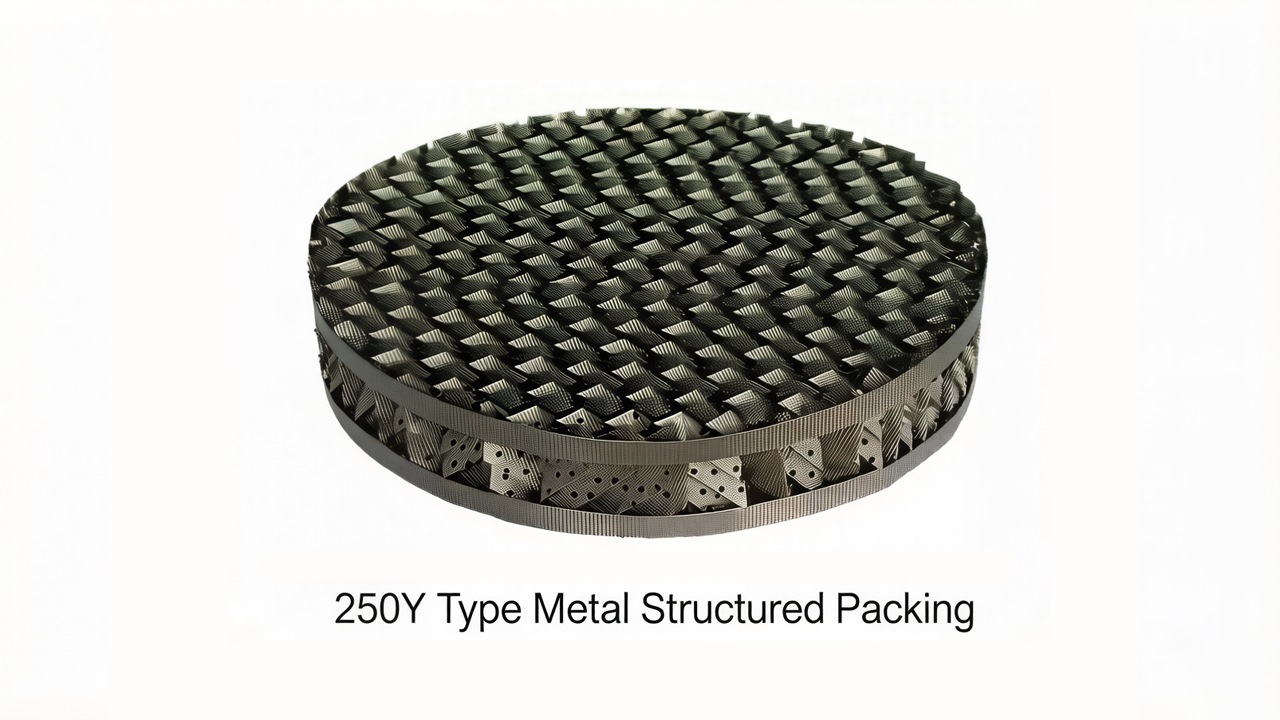
"Our distillation column separation efficiency is always stuck at a bottleneck, product purity won't improve..." "Steam consumption is a bottomless pit, energy costs are suffocating..." "We want to expand capacity, but the plant footprint is fixed, a complete rebuild isn't realistic..." "Handling corrosive materials, the packing lifespan is short, maintenance costs are too high..." "With just a slight feed fluctuation, column operation becomes unstable, product quality is inconsistent..." These real voices from process engineers and production managers reveal common core challenges in chemical separation processes. When traditional trays or random dumped packing struggle to meet increasingly stringent efficiency and energy demands, Metal Structured Packing has emerged as a key technology for modern process industries to break through bottlenecks. This article focuses on five common engineering challenges, analyzing how metal structured packing provides systematic solutions
In the production of fine chemicals, electronic chemicals, and pharmaceutical intermediates, product purity requirements are nearly苛刻, translating directly into extreme demands for the theoretical stage count and separation efficiency of tower internals.
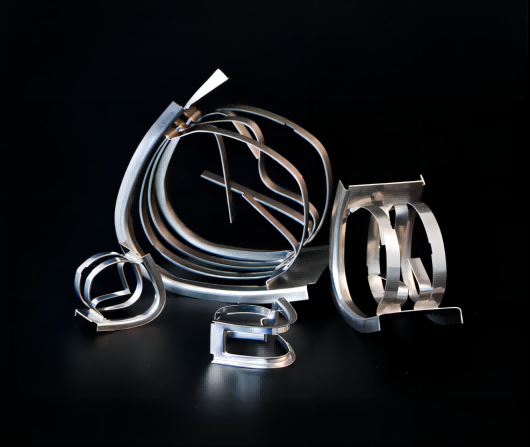
The solution from metal structured packing lies in its superior microstructure. Taking Ayrtter's AY-MSP350X model as an example, its regular corrugated channels create exceptionally uniform gas-liquid distribution, virtually eliminating maldistribution phenomena like "channeling" and "wall flow," allowing each theoretical stage to perform at its maximum potential. Compared to conventional random packing, metal structured packing can increase the theoretical stage count by over 30% at the same column height. This means:
Either achieving higher product purity within the existing column height.
Or significantly reducing column height to meet the same separation requirement, thereby lowering equipment investment and footprint.
Separation processes, especially distillation, are major "energy consumers" in chemical plants. The energy is primarily consumed in providing reboiler heat at the column bottom, and the column pressure drop is a key factor determining the reboiler temperature (and thus energy consumption).
Metal structured packing is a natural "energy saver." Gas flows through its internal regular, smooth channels with minimal resistance. Data shows that at the same gas velocity, the pressure drop of metal structured packing is typically only 1/4 to 1/3 that of random packing. Lower pressure drop means:
For vacuum distillation, the bottom temperature can be reduced further, significantly lowering steam consumption and better protecting heat-sensitive materials.
For atmospheric/pressure distillation, the low pressure drop allows operation at higher capacities or directly reduces overall reboiler energy consumption. In a refinery vacuum column retrofit case, switching to high-efficiency structured packing resulted in a 15-20% reduction in steam consumption with a very short payback period.
Market opportunities are fleeting, but building new columns takes time and significant investment. How to tap the potential of existing equipment within the original framework is a practical challenge for many plants.
The high capacity characteristic of metal structured packing makes this possible. Due to its excellent hydrodynamic performance, it can handle larger gas and liquid phase loads before reaching the flooding point. In actual capacity expansion revamps, by replacing with Ayrtter's high-capacity metal structured packing, it's often possible to achieve a 20%-40% increase in processing capacity without changing the column diameter. This is equivalent to gaining nearly the capacity of a new production line at the cost of an "internal column surgery," offering a very high return on investment.
When processing acid gases, halides, or other corrosive systems, the long-term stable operation of equipment is a significant test. The advantage of metal structured packing lies in its diversity of materials and customizability.
Ayrtter not only provides conventional 304, 316L stainless steel materials but can also supply packing manufactured from duplex steel, Hastelloy, or even titanium based on material characteristics. More importantly, we can apply special passivation treatments or functional coatings to the packing surface to further enhance its corrosion resistance, fouling resistance, or improve its wettability. This comprehensive protection from the "skeleton" to the "skin" ensures long service life and stable performance in harsh environments.
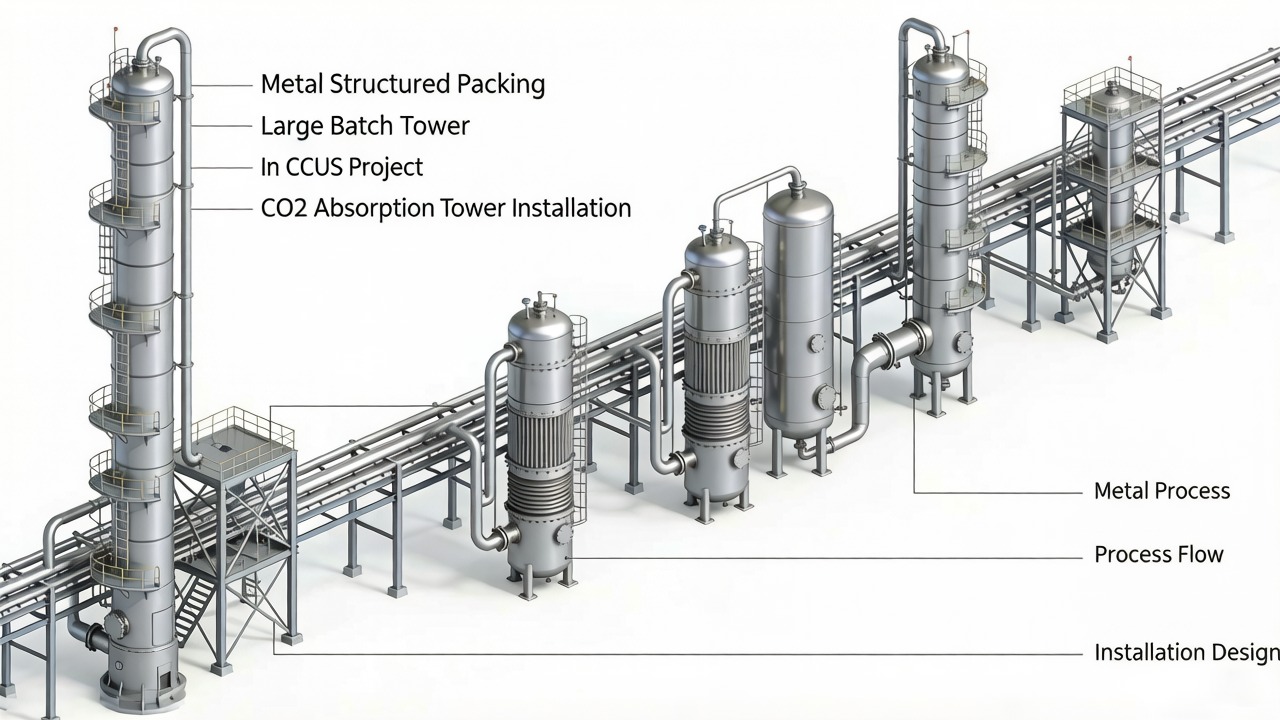
Modern plants often need to switch product grades or handle feedstocks with fluctuating compositions, requiring separation columns to have good operational flexibility.
Metal structured packing maintains high separation efficiency over a wide range of operating loads. Compared to trays, it lacks distinct "weeping" or "entrainment"拐點; compared to some random packing, its efficiency decline curve with load is gentler. This means that when feed rate or composition varies within a certain range, metal structured packing can still ensure stable product quality, providing reliable support for flexible plant operations.
Recognizing the advantages of metal structured packing is only the first step. Achieving the leap from "usable" to "optimal" hinges on scientific selection. This requires comprehensive consideration of:
Process Objectives: Is the goal ultimate purity (choose higher specific surface area models like 500Y), or maximum processing capacity (choose high-capacity models like 125Y/250Y)?
Physical Properties: The corrosiveness, foaming tendency, and cleanliness of the material determine the choice of material and surface treatment.
Operating Conditions: Vacuum, atmospheric, or high-pressure operation, continuous or batch production, all influence the final design.
Ayrtter's technical team can provide professional process simulation support and customized design to ensure the selected packing perfectly matches your process flow, unlocking maximum value.
Title (60 chars):
Solve 5 Separation Challenges: Metal Structured Packing Efficiency Guide - Ayrtter
Meta Description (280 chars):
Struggling with low purity, high energy use, or capacity limits? Ayrtter explains how Metal Structured Packing solves 5 core chemical separation pain points. Get high efficiency, low pressure drop, corrosion-resistant solutions. Download our selection guide.
Article Tags:
Metal Structured Packing, Separation Efficiency, Distillation Energy Saving, Chemical Packing Selection, High Pressure Drop Solution, Corrosion Resistant Packing, Column Capacity Expansion, Process Optimization, Mass Transfer Equipment, Ayrtter Solutions
 IPv6 network supported Sitemap | XML | Blog | Privacy Policy





 Address : Intersection of Jinguang Avenue and Chongqing Middle Road, Anyuan Industrial Park, Anyuan District, Pingxiang City, Jiangxi
 Tel :
Tel :  Email :
  WhatsApp :